
Single-Source Milk vs. Collection Milk: Which Is Better for Your Health?
Summary: This blog compares single-source milk (like Mr. Milk’s) to collection milk from multiple farms. It highlights how single-source A2 milk ensures consistency, traceability, and quality – offering customers better transparency and trust in their daily dairy.
Key Highlights:
- Single-source milk comes from one dedicated farm
- Offers better traceability and quality control
- Minimises the risk of adulteration and contamination
- The collection of milk lacks consistency due to mixed sources
When it comes to choosing milk for your family, the options available in the market can be overwhelming. Among these options, two types stand out: single-source milk and collection milk. While both are widely available, the health benefits of single-source milk are gaining attention for its purity, quality, and nutritional advantages.
In this blog, we explore the differences between these two types of milk and why single-source milk might just be the better choice for your health.
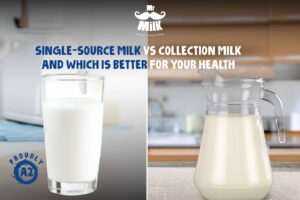
What is Single-Source Milk?
Single-source milk refers to milk that comes from a single farm or a single herd of cows. It’s collected directly from a specific source, ensuring traceability and consistency. This type of milk is often regarded as being fresher and more reliable in terms of quality. With single-source milk, you know exactly where your milk comes from, and the conditions under which the cows are raised and fed can be better controlled.
What is Collection Milk?
Collection milk, on the other hand, is sourced from various farms and dairy suppliers and then pooled together at a collection point before being processed and distributed. This type of milk is often mass-produced and may come from different herds, which can vary in quality and nutritional value. It’s difficult to trace the exact origin of collection milk, and the cows from which it’s sourced may be raised under different conditions with varying levels of care and feed.
The Health Benefits of Single-Source Milk:
1. Purity and Freshness – One of the most significant advantages of single-source milk is its purity. Since it comes from a single farm or herd, the milk is less likely to be exposed to contaminants or mixed with milk from other sources. This means you’re getting a fresher, cleaner product. A2 milk from desi cows, often found in single-source offerings, is particularly beneficial, as it’s easier to digest and may help reduce digestive discomfort, making it a healthier option for sensitive individuals.
2. Better Nutritional Value – Milk from single-source farms, especially A2 milk, is rich in nutrients. The cows are typically raised in more controlled environments, with better quality feed and care. This can lead to milk that contains higher levels of essential nutrients such as vitamins, minerals, and healthy fats. A2 milk is easier on the digestive system, which is particularly beneficial for those with lactose intolerance. It also contains higher levels of omega-3 fatty acids, which are essential for heart and brain health.
3. Transparency and Traceability – With single-source milk, consumers have more transparency about where their milk comes from. You can learn about the farm’s practices, how the cows are treated, and what they are fed. This transparency is vital for consumers who prioritize ethical and sustainable farming practices. Furthermore, single-source milk is usually processed with more care, ensuring that you are getting a product that hasn’t been diluted or mixed with milk of questionable quality.
The Drawbacks of Collection Milk:
While the collection milk is convenient and readily available in many parts of the world, it comes with some drawbacks. The mixing of milk from various sources can result in inconsistent quality, with some batches being richer in nutrients than others. Additionally, since collection milk is often processed at large-scale dairies, it may undergo extensive pasteurization, which can reduce the levels of beneficial enzymes and nutrients present in the milk.
The lack of traceability also raises concerns about how the cows are treated, what they’re fed, and the conditions under which the milk is produced.
Conclusion: The Better Choice for Your Health
When it comes to milk purity, single-source milk is undoubtedly the healthier option. The higher nutritional value, better quality, and traceability of single-source milk make it a superior choice for health-conscious individuals. If you’re looking for fresh milk that’s free from contaminants, supports better digestion, and offers a more sustainable option for your family, single-source A2 milk from desi cows is the way to go.
At Mr. Milk, we’re committed to offering you the best of nature with our single-source A2 milk, ensuring that you and your family get the purest, freshest milk available, directly from our A2 Milk Farm in Pune. By choosing Mr. Milk, you’re not just opting for a healthier option—you’re supporting ethical farming practices and contributing to a more sustainable dairy industry.
So, next time you head to the store or open the Mr. Milk app, remember: when it comes to milk, purity and quality matter.
Choose single-source milk for better health, better taste, and a better future.
FAQs:
Q.1: If A2 milk is easier to digest, why might collection milk cause more digestive discomfort?
A: Collection milk often contains a mix of A1 and A2 beta-casein proteins. The A1 protein, upon digestion, can release a peptide called BCM-7, which is associated with increased digestive discomfort, bloating, and sensitivity in some individuals. Single-source A2 milk removes this risk.
Q.2: Does single-source milk have a longer or shorter shelf life than collection milk?
A: Single-source milk, due to its freshness and minimal processing, often has a shorter shelf life than ultra-pasteurised (UHT) collection milk. The focus of single-source providers is on delivering the freshest product, relying on rapid chilling and a controlled cold chain rather than chemical preservation or extensive heat treatment.
Q.3: How does the single-source model support ethical and sustainable farming practices?
A: The single-source model means the brand is directly accountable for all operations on the farm. This vertical integration makes it financially viable to invest in ethical cow welfare, sustainable feed practices, and environmental management, unlike collection models, where profit margins are prioritised at the expense of third-party farm practices.
Q.4: How can I verify the claim that a milk is truly “single-source” and not mixed?
A: A truly single-source brand will offer complete transparency, often inviting customers to visit the farm (like the Mr. Milk farm in Pune) or providing detailed information about their cow feed, milking process, and packaging protocols, verifying that no external collection centres are involved.