
Are You Paying for Milk or for Quality? Understanding What Goes Into Premium Milk Pricing
Summary: The pricing of premium milk is more than just a branding exercise; it is a reflection of a rigorous, transparent journey from farm to fridge. By prioritising indigenous Gir cows, ethical animal welfare, and touch-free milking practices, premium providers ensure a level of purity and nutrition that mass-produced dairy cannot match. With specialised infrastructure like cold-chain logistics and rapid delivery in cities like Pune, the higher cost represents an investment in freshness, safety, and the long-term health benefits of authentic A2 protein.
Key Highlights:
- Traceability: Unlike conventional milk, premium milk follows a direct “farm-to-home” path, ensuring you know exactly where your dairy comes from.
- Indigenous Breeds: The use of Gir cows for A2 milk yields lower but significantly higher nutritional quality than hybrid breeds.
Ethical Welfare: Investments in high-quality feed, open grazing, and stress-free environments directly correlate to the quality of the milk produced. - Advanced Hygiene: Touch-free milking and minimal processing preserve the milk’s natural properties while ensuring zero contamination.
- Cold Chain Logistics: Rapid chilling and temperature-controlled transport are vital for maintaining freshness without the need for heavy processing.
Milk is often seen as a daily staple – something simple, routine, and interchangeable. But when you look closer, not all milk is created equal. The difference in pricing between regular and premium milk isn’t just about branding or positioning. It’s about everything that happens long before the milk reaches your glass.
What is A2 Milk?
A2 milk is cow’s milk that contains only the A2 type of beta-casein protein, as opposed to A1 beta-casein found in most commercial dairy milk. Beta-casein is one of the primary proteins in milk, and its type is determined by the breed of cow. When A1 beta-casein is digested, it releases a peptide called BCM-7 (beta-casomorphin-7), which some researchers associate with digestive discomfort in certain individuals.
A2 milk does not produce BCM-7 during digestion, making it gentler on the stomach for many people.
A2 Milk vs A1 Milk:
Here is a side-by-side breakdown of A2 desi cow milk vs regular A1 milk across the parameters that matter most:
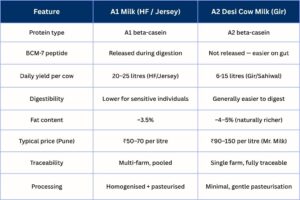
Key insight: The lower daily yield of Gir cows is the single biggest driver of the higher Gir cow milk price per litre in Pune. It is not a premium markup – it is the cost of raising the right breed responsibly.
The Journey of Premium Milk: From Farm to Your Doorstep –
Premium milk follows a shorter, more controlled journey, from a single farm to your home. Unlike conventional supply chains that involve multiple collection points and storage facilities, farm-to-home milk delivery focuses on traceability and speed. In cities like Pune and PCMC, this model ensures that milk is delivered fresh, often within hours of milking.
What you’re paying for here is not just milk, but consistency, freshness, and a transparent supply chain.
Indigenous Breeds & A2 Milk: Does Breed Impact Cost?
One of the biggest factors in premium milk pricing is the type of cows. A2 desi cow milk comes from indigenous breeds like Gir cows, which naturally produce A2 protein. These breeds typically yield less milk compared to hybrid or commercial cows, but the focus is on quality over quantity.
Maintaining indigenous breeds requires more space, better care, and long-term investment. This directly impacts cost, but it also ensures a more traceable and authentic source of milk.
Quality Feed & Animal Care: The Hidden Investment
Behind every litre of premium milk is a significant investment in animal welfare. High-quality feed, clean water, open grazing areas, and regular veterinary care all contribute to healthier cows and better milk.
Ethical dairy farming in India is not about maximising output; it’s about maintaining balance. When farms prioritise cow comfort, hygiene, and stress-free environments, it reflects in the overall quality of milk. These practices add to the cost but are essential for long-term sustainability.
Hygiene, Milking Practices & Minimal Processing:
Another key factor is how the milk is handled. Premium dairy farms focus on hygienic milking practices, often using touch-free or automated systems to reduce contamination. The goal is to maintain purity from the source itself.
Minimal processing also plays a role. Unlike mass-produced milk that goes through extensive processing and storage, premium milk is handled gently to preserve its natural properties. This requires better infrastructure and stricter monitoring.
Cold Chain & Doorstep Delivery: Ensuring Freshness at a Cost –
Milk is highly perishable, which makes logistics a critical part of pricing. Premium milk relies on a cold chain system- rapid chilling after milking, temperature-controlled storage, and quick delivery.
Farm-to-home milk delivery in Pune ensures that milk remains fresh throughout its journey. Maintaining this cold chain involves infrastructure, transportation, and coordination, all of which contribute to the final cost.
Read More:Why Mr. Milk is More Than Just a Dairy? – It’s a Promise of Purity
Quality Testing & Transparency: Paying for Trust –
Regular quality testing is another layer that adds to premium milk pricing. Each batch is tested for purity, safety, and consistency. This ensures that what reaches your home meets strict standards.
Transparency is equally important. Knowing where your milk comes from, how it is produced, and who is behind it builds trust. This traceability is something conventional milk systems often lack.
Read More:Mr. Milk: Redefining Trust in Dairy with Transparency and Traceability
Price vs Value: What Are You Actually Paying For?
When you compare premium milk to conventional options, the difference becomes clear. Mass-produced milk reduces costs through large-scale operations, mixed sourcing, and extended storage. While this makes it more affordable, it often compromises on traceability and consistency.
Premium milk, on the other hand, is about value creation. You’re paying for better sourcing, ethical farming, hygienic handling, freshness, and transparency.
At Mr. Milk, this philosophy is at the core of everything – from maintaining desi cows to ensuring farm-to-home delivery. It’s not just about selling milk; it’s about delivering quality you can trust every day.
In the end, the real question isn’t just about price…it’s about what that price represents!
FAQs:
Q.1: Why is A2 Desi cow milk more expensive than regular milk?
A: Desi cows, like the Gir breed, naturally produce A2 protein milk but have a lower daily yield than commercial hybrid cows. The higher price covers the cost of maintaining these indigenous breeds and the superior nutritional value they provide.
Q.2: Does “farm-to-home” delivery really make a difference?
A: Yes. Conventional milk often passes through multiple collection centres and storage points. Farm-to-home delivery, like Mr. Milk’s service in Pune, reduces transit time to just a few hours, ensuring maximum freshness and nutrient retention.
Q.3: What role does animal feed play in milk pricing?
A: Premium milk comes from cows fed a high-quality, balanced diet. Investing in nutrient-rich feed and clean water is more expensive than standard fodder, but it results in milk that is healthier and free from harmful additives.
Q.4: Why is the “Cold Chain” so important for premium milk?
A: Since premium milk is minimally processed, it relies on a strict cold chain – rapidly chilling the milk immediately after milking and keeping it at a constant low temperature until it reaches your doorstep – to prevent bacterial growth.
Q.5: Is premium milk processed differently from standard milk?
A: Standard milk is often heavily processed to extend shelf life. Premium milk focuses on minimal processing and hygienic, touch-free milking systems to keep the milk as close to its natural state as possible.
Q.6. Are you just paying for the brand name?
A: No. While branding is involved, the premium price primarily covers the “hidden” costs of quality assurance, such as regular lab testing for purity, ethical farming practices, and specialised logistics that ensure safety and transparency.
Q.7: How does touch-free milking improve quality?
A: Automated or touch-free milking systems reduce the risk of human-to-milk contamination. This ensures the milk remains pure and has a lower bacterial count, leading to a safer and longer-lasting product naturally.