
What is the difference between A1 and A2 milk? (2026 Updated Guide)
Quick answer: A1 and A2 milk differ in a single protein variant – beta-casein. A2 milk, found naturally in Indian Desi Cows like Gir, is easier to digest and linked to a range of health benefits. Keep reading to understand exactly why this difference matters for you and your family.
Key Highlights:
- Protein Structure: A2 milk lacks the A1 beta-casein protein, eliminating the release of the inflammatory peptide BCM-7.
- Digestive Comfort: Many individuals misdiagnosed with lactose intolerance find they can easily digest A2 Desi Cow Milk.
- Nutritional Superiority: Derived from indigenous Gir Cows, A2 milk is richer in Omega-3 fatty acids, Vitamin D, and Calcium.
- Hyper-Local Access: Mr. Milk provides specialised farm-to-home free delivery in Pune & PCMC, ensuring peak freshness within hours of milking.
Walk into any conversation about healthy living in India today, and sooner or later, someone will bring up A2 milk. Social media is full of claims, your neighbour swears by it, and maybe you’ve already noticed more dairy labelling their products “A2.” But what does that actually mean? Is it just a marketing buzzword, or is there real science behind it?
At Mr. Milk, we believe our customers deserve clear, honest answers before making a choice about what goes into their morning chai. So here is a straightforward, science-backed guide – no jargon, no hype.
It All Comes Down to One Protein:
Milk is much more than white water. It contains water, fats, lactose, vitamins, minerals, and proteins. The proteins in milk are broadly split into whey proteins and casein proteins. Casein makes up about 80% of the total protein, and the most abundant casein is called beta-casein.
Beta-casein comes in two main genetic variants: A1 and A2. This is the entire basis of the A1 vs A2 debate.
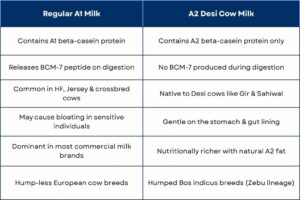
Here is the key difference: when you digest A1 beta-casein, it releases a small peptide called BCM-7 (beta-casomorphin-7). A2 beta-casein does not produce BCM-7 during digestion. Research published over the past two decades suggests that BCM-7 may be responsible for digestive discomfort, bloating, and inflammation in some people – symptoms that are often mistakenly attributed to lactose intolerance.
A1 vs A2 Milk: A Side-by-Side Look –
Why are Desi Cows like Gir Cows Special?
India’s native cattle breeds – collectively known as Desi Cows – have been producing pure A2 milk for thousands of years. Of these, the Gir cow, originally from the Gir forests of Gujarat, is considered one of the finest dairy breeds in the world.
Gir cows produce milk that is entirely A2 in composition. Their milk is also rich in Omega-3 fatty acids, conjugated linoleic acid (CLA), Vitamin D, and a compound called Cerebroside – all of which are associated with improved brain health, heart health, and immunity.
Another remarkable characteristic of Gir and other Desi cows is the presence of a Surya Ketu nadi – a nerve identified in Ayurvedic texts that runs along the spine. It is believed to synthesise special nutrients through sunlight exposure, giving Desi cow milk its characteristic golden hue from natural beta-carotene.
Whether you follow Ayurveda or modern nutrition science, the benefits of A2 Desi cow milk are well documented on both fronts.
The Key Benefits of A2 Milk:
🌿Easier digestion: No BCM-7 means less bloating, cramping, and gut irritation after drinking milk.
🧠Brain & nerve health: Rich in Cerebroside and Omega-3, known to support cognitive function and focus.
💪Stronger immunity: Higher levels of Vitamin D, calcium, and CLA support a robust immune system.
❤️Heart-friendly fats: Natural A2 fat profile and CLA help maintain healthy cholesterol levels.
👶Ideal for children: Gentle protein structure closely mirrors human breast milk, great for growing kids
🌾Better for the planet: Desi cows are low-input animals, sustainably suited to the Indian climate and feed.
Who Should Especially Consider Switching to A2 Milk?
If you have ever felt heavy, gassy, or uncomfortable after drinking regular commercial milk – but tested negative for clinical lactose intolerance – A2 milk could genuinely change things for you. The culprit in those cases is very often BCM-7 from A1 protein, not lactose.
Beyond that, A2 Desi Cow Milk is particularly worth considering for:
- Young children and infants are being introduced to cow’s milk
- Elderly individuals with sensitive digestive systems
- People managing diabetes or metabolic conditions
- Anyone who values clean, chemical-free, traditionally produced food
- Fitness enthusiasts looking for clean protein without gut stress
How to Identify True A2 Milk?
This is where consumers need to be careful. The term “A2 milk” is not regulated in India, which means brands can use it loosely. Here is what to look for when choosing a genuine A2 product:
- Milk sourced exclusively from identified Desi cow breeds (Gir, Sahiwal, Tharparkar, Red Sindhi)
- Cows are maintained on natural grass and feed – no hormones or growth supplements
- Transparent farm practices – ideally, the dairy allows farm visits or shares live updates
- No adulteration with commercial or crossbred cow milk
- Cold-chain maintained from the farm to your doorstep for freshness
Read In Detail: How to Spot Genuine A2 Desi Cow Milk? A Quick Guide for Conscious Consumers
Farm-fresh A2 milk delivered free to your door – Pune & PCMC
At Mr. Milk, our Gir cows are raised on open pastures with love and zero chemicals. We bring you pure A2 Desi Cow Milk with free farm-to-home delivery across Pune and PCMC – fresh every single morning, straight from our herd to your family’s table.
No middlemen. No compromises.
A2 Milk vs Regular Milk: Does It Cost More?
Yes, A2 Desi Cow Milk is priced higher than commodity milk, and the reasons are straightforward. Desi cows produce significantly less milk per day compared to crossbred or HF cows. They require more land, natural feed, and attentive care. The milk is never pooled with low-grade sources. And the entire logistics chain – from ethical farming to cold-chain delivery – comes at a real cost.
But here is the perspective shift: when you consider the health benefits, the digestive comfort, the absence of adulteration, and the fact that you are supporting ethical and sustainable dairy farming, A2 milk is not expensive – it is the right price for something genuinely good.
Read More:Understanding the A2 Milk Price: Why It Costs More Than Regular Milk?
Frequently Asked Questions:
Q.1: Can people with lactose intolerance drink A2 milk?
A: While A2 milk still contains lactose, many people who think they are lactose intolerant are actually sensitive to the A1 protein. Many of our customers in Pune have reported that they can enjoy Mr. Milk A2 milk without the digestive distress they feel with regular milk.
Q.2: Is A2 milk better for infants and children?
A: Yes. Because A2 milk is closer in structure to human breast milk than A1 milk, it is often recommended for growing children to ensure better digestion and cognitive development.
Q.3: Why is A2 milk more expensive than regular milk?
A: Producing pure A2 Desi Cow Milk requires more care. Indigenous cows like Gir cows produce less milk compared to hybrid H-F cows. However, the nutritional density and health benefits far outweigh the marginal cost difference.
Q.4: How can I get Mr. Milk delivered to my home?
A: We offer free delivery in Pune and PCMC! You can subscribe through our app or website to get fresh, chilled A2 milk delivered to your doorstep every morning.
Q.5: Which cow breeds give true A2 milk in India?
A: All indigenous Indian Desi cow breeds naturally produce pure A2 milk. The most well-known ones are Gir (Gujarat), Sahiwal (Punjab/Rajasthan), Tharparkar (Rajasthan), Red Sindhi, and Rathi. Among these, the Gir cow is especially prized for high milk yield and rich nutritional profile, making it the top choice for premium A2 dairies like Mr. Milk.
Q.6: How is A2 Desi Cow Milk different from buffalo milk or packaged milk?
A: Buffalo milk is higher in fat and calories but contains a different casein composition – it is neither A1 nor A2 in the same sense, and it is heavier to digest. Packaged commercial milk is typically sourced from HF or crossbred cows (A1), often pasteurised to high temperatures, which reduces some nutrient content, and may contain additives. A2 Desi Cow Milk from breeds like Gir is lighter, more bioavailable, naturally rich in nutrients, and free from chemical interventions – making it the superior choice for daily nutrition.
Conclusion: Make the Switch Today
The choice between A1 and A2 milk isn’t just a trend; it’s a return to quality. By choosing A2 Desi Cow Milk, you are supporting indigenous Indian breeds, promoting sustainable farming, and, most importantly, investing in your family’s long-term health.
Experience the richness of Gir Cow milk for yourself. With Mr. Milk’s seamless farm-to-home delivery, the purest milk in Pune and PCMC is just a click away.
Your gut will thank you.